
7 Things Homeowners Should Expect During a Residential Demolition Project
Planning a demolition on your property can feel stressful, especially if you have never done it before. Whether you are clearing an old shed in Auburn WA, tearing out a leaning fence behind a rental in Renton, WA, or removing a worn out barn on a larger lot, the process is much easier when you know what to expect.
Below are 7 key things homeowners should expect during a residential demolition project, focused on sheds, garages, fences, barns, and other outbuildings.
1. A Clear Scope Of What Is Being Removed
Every project should start with a clear conversation about what is coming down and what needs to stay. Your contractor will typically walk the property with you, point out sheds, garages, barns, fences, or small cabins that are included, and confirm any items or features that must be protected. This is also the time to mention anything you want to salvage before work begins, such as doors, hardware, or lumber.
2. Permits And Local Requirements
Even small structures can trigger local permit rules, especially in city neighborhoods similar to parts of White Center, WA. Before demolition starts, you and your contractor should understand what the city or county requires. Common items include:
-
A demolition or removal permit for the structure
-
Possible inspections for asbestos or other hazards in older buildings
-
HOA or neighborhood approvals if you live in a controlled subdivision
A professional demolition and junk removal company will either handle these steps or give you clear guidance so nothing is missed.
3. Safe Utility Disconnections
Safety starts with utilities. Any structure that has ever had power, gas, or water connected must be checked before demolition. That is true for barns with old service panels, detached garages with lighting, and sheds that once had a hose bib or utility sink. Utilities that often need to be disconnected or capped include:
-
Electrical service to detached buildings
-
Gas lines that fed heaters or equipment
-
Water lines or irrigation pipes serving the structure
Your contractor should confirm everything is safely off before the first board comes down.
4. How To Prepare Your Structure For Demolition
You will have a short to do list before the crew arrives, especially if the outbuilding has been used for storage. In a typical backyard project in Auburn WA, for example, the homeowner might need to clear out tools, boxes, and seasonal items. Preparation often includes:
-
Removing personal belongings you want to keep
-
Unlocking gates and making sure equipment can reach the site
-
Moving vehicles, trailers, or lawn equipment away from the work area
If there are plants, trees, or hardscape you care about, point those out in advance so the crew can protect them as much as possible.
5. What Happens On Demolition Day
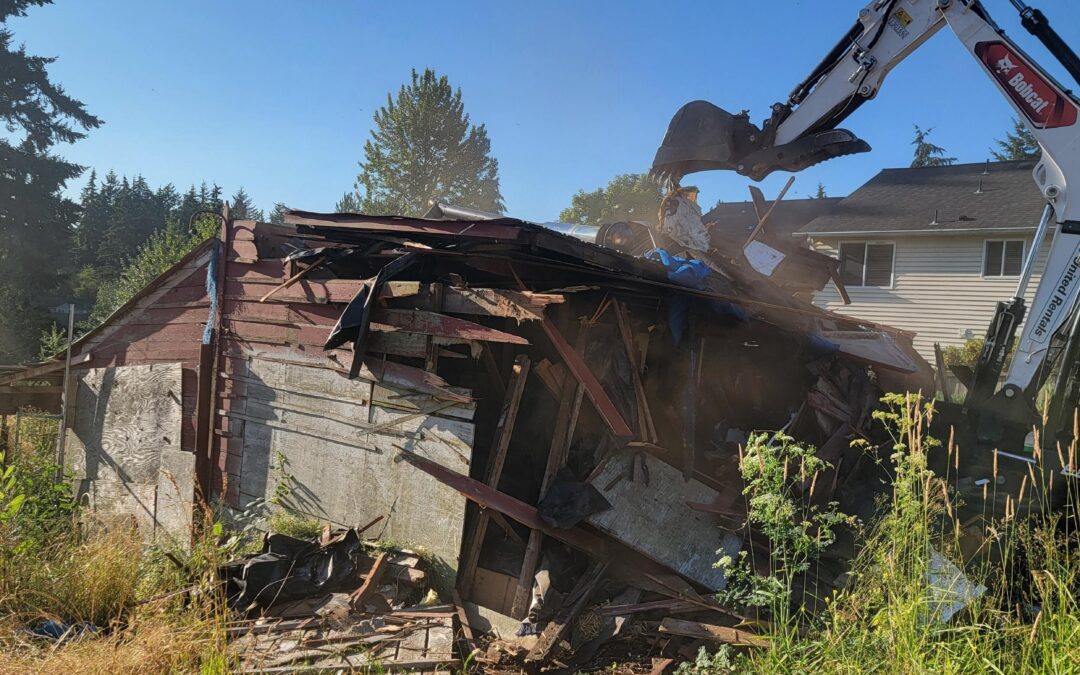
Demolition day is busy but should not feel chaotic. The crew will arrive, review the plan with you, and set up cones, caution tape, or temporary fencing if needed. They will then begin taking down the structure in a controlled sequence using a mix of equipment and hand tools. As material comes down, it is sorted and loaded into trucks or containers. Smaller projects, like a single fence line or shed in Renton, WA, can often be completed in a single day.
6. Noise, Dust, And Access Around Your Property
Any demolition creates some noise and dust, especially when older wood or roofing is removed. A good contractor will manage these issues and keep things as neat as possible. You can expect them to focus on:
-
Light dust control, often using water while they work
-
Safe traffic patterns for trucks and equipment on your driveway
-
Respect for neighboring yards, sidewalks, and shared access points
Talk with your contractor about where you should park, how close you can be to the work area, and the best way to keep kids and pets away from the site during active work.
7. Debris Removal And Final Cleanup
One of the biggest advantages of hiring a demolition and junk removal company is not having to deal with the pile of debris afterward. Once the fence, barn, garage, or shed is down, the crew will load and haul away the material to appropriate disposal or recycling facilities. They will pick up loose debris, remove nails or sharp scraps, and may rough level the ground if that is part of the agreement. The goal is to leave you with a clean, safer space that is ready for its next use.
Frequently Asked Questions
How to prepare a house for demolition?
If you are removing structures around a house, preparation starts with clearing anything you want to keep, both inside and around the buildings. Coordinate utility shut offs for any power, gas, or water serving sheds, garages, barns, or fences. Make sure gates are unlocked and access is clear. It also helps to talk with close neighbors so they know when trucks and noise will be on site.
At what point is a house not worth fixing?
A house may not be worth fixing when major structural problems, failing systems, and extensive damage all stack up to a repair cost that is close to or higher than replacement. In that situation, it can make sense to remove unsafe add ons, old garages, and collapsing barns first, then compare the cost of full renovation with the cost of a new build. A contractor or inspector can help you understand the true condition before you decide.